Welcome to Xi’an Good Doctor Medical Science and Technology Co., Ltd.website !
Internet Drug Information Service Qualification Certificate: (Shaanxi)-Non-Operating -2023-0143


How to differentiate between cancerous and non-cancerous ascites
A normal person's abdominal cavity contains only a small amount of fluid, which lubricates the internal organs. When the amount of fluid in the abdominal cavity increases to more than 200 ml, it is called ascites. This article describes the diagnostic and therapeutic characteristics and treatment methods of different types of ascites, aiming to help more clinicians better understand and manage this clinical problem.
2024-09-12
A normal person's abdominal cavity contains only a small amount of fluid, which lubricates the internal organs. When the amount of fluid in the abdominal cavity increases to more than 200 ml, it is called ascites. This article describes the diagnostic and therapeutic characteristics and treatment methods of different types of ascites, aiming to help more clinicians better understand and manage this clinical problem.
Characteristics of ascites caused by different etiologies
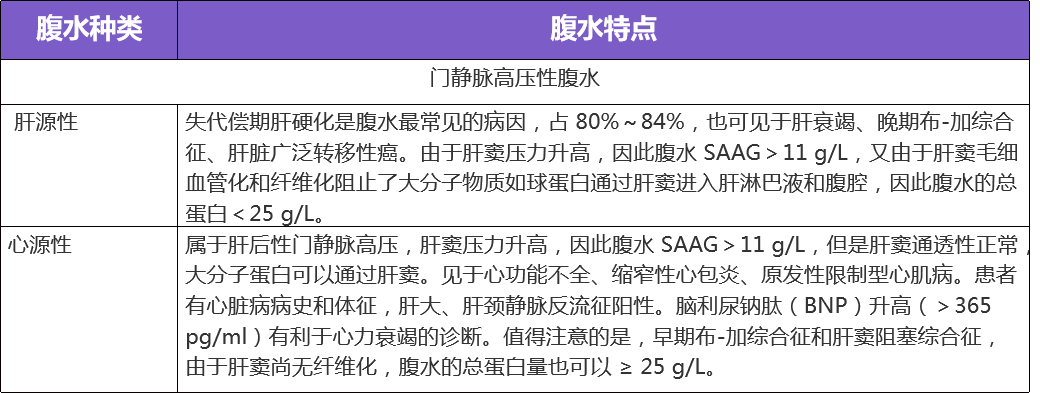
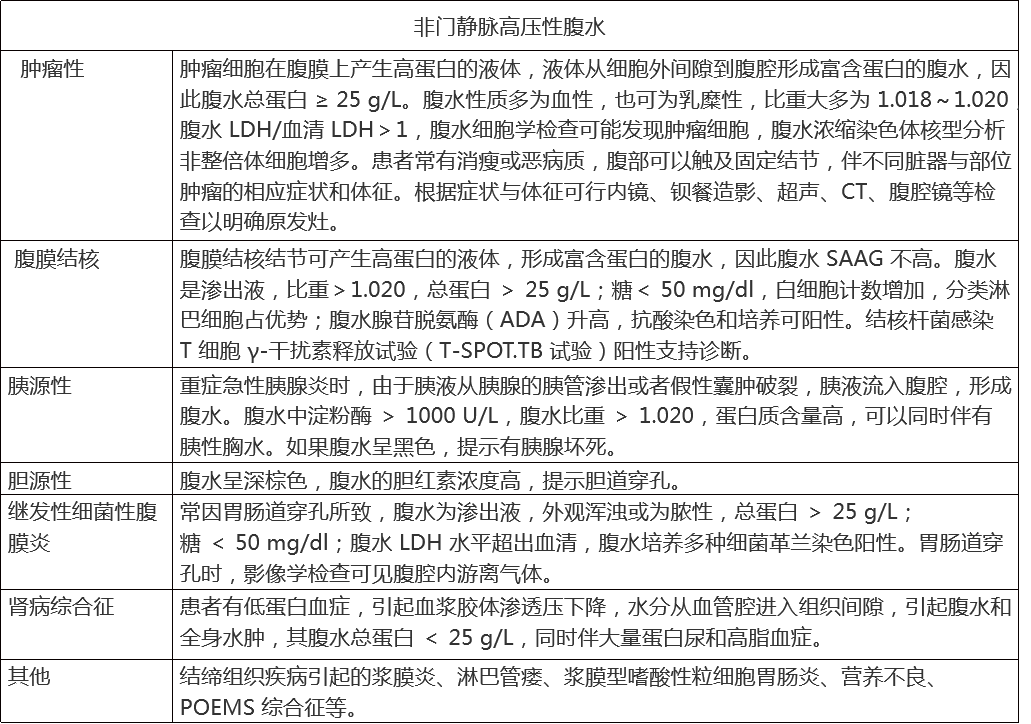
The causes of ascites can be divided into hepatogenic, cardiogenic, cancerous, vasculogenic, nephrogenic, nutritional deficiency, and tuberculous, etc., therefore, the diagnosis and differentiation of the etiology of ascites is very important. Diagnostic puncture and analysis of ascites is the most important part. Laparoscopic examination plus biopsy is the "gold standard" for diagnosing the cause of ascites For ascites of unknown origin, this examination should be considered if the patient's condition permits.
Table 1. Characteristics of ascites caused by different etiologies
Biochemical tests related to the diagnosis of benign and malignant ascites [1]
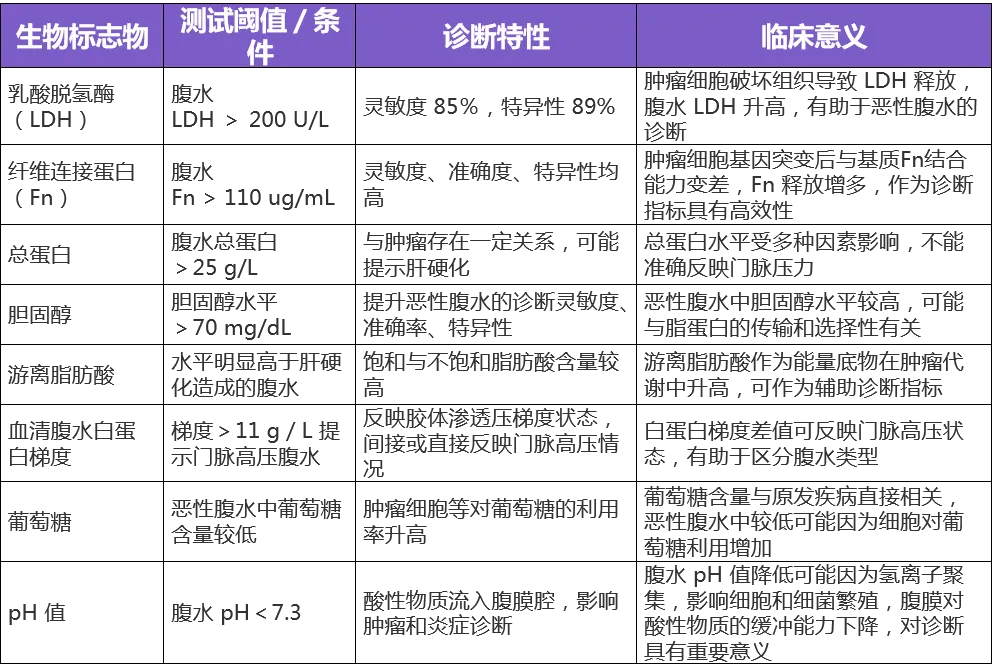
There are many biochemical items for clinical detection of ascites, among which Common biochemical indicators with greater clinical significance are briefly described below.
Table 2. Biochemical tests related to the diagnosis of benign and malignant ascites
Strategies for managing cancerous ascites
Clinically, ascites can be classified into grade 1 (small amount), grade 2 (moderate amount), and grade 3 (large amount) according to the amount of ascites.
▌ Grade 1 or small amount of ascites: Ascites that can only be detected by ultrasound examination. Patients generally do not have abdominal distension, and shifting dullness is negative; ultrasound ascites depth < 3 cm.
▌ Grade 2 or moderate amount of ascites: Patients often have moderate abdominal distension and symmetrical abdominal distension, shifting dullness is negative/positive; ultrasound ascites depth 3~10 cm.
▌ Grade 3 or large amount of ascites: Patients have obvious abdominal distension, positive shifting dullness, and may have abdominal distension or even umbilical hernia formation; ultrasound ascites depth > 10 cm [2]
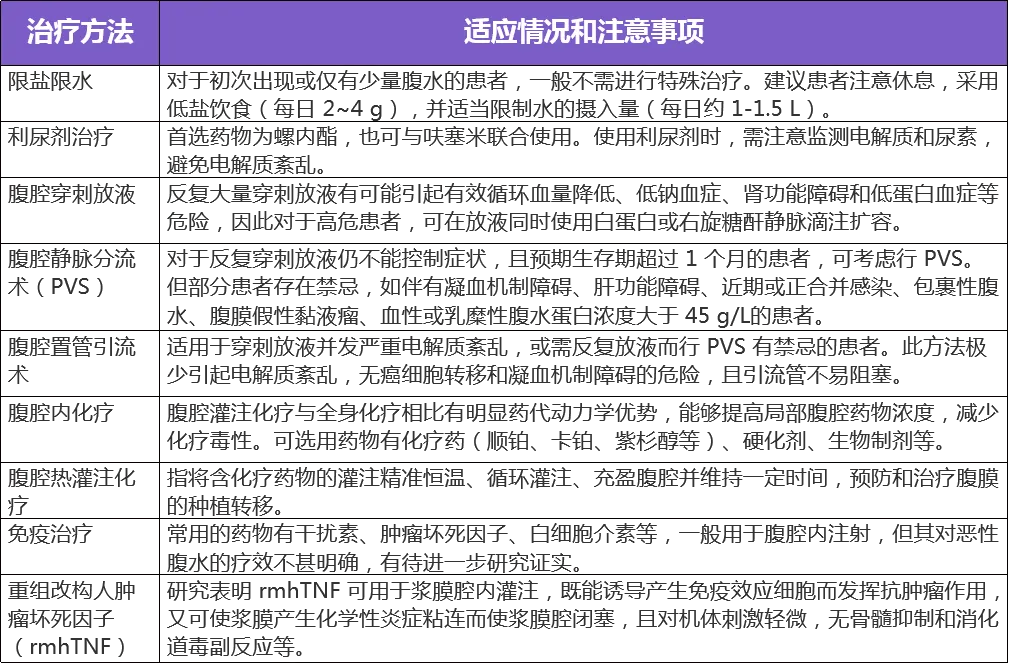
Treatment of the cancer itself is the fundamental method to reduce ascites. By using chemotherapy, radiotherapy, targeted therapy, and other methods to control the growth and spread of tumors, it helps to reduce the production of ascites. At the same time, for specific types of cancer, such as liver cancer and ovarian cancer, using targeted treatment plans can more effectively control ascites. On the basis of systemic treatment, local treatment can be used to alleviate symptoms.
Table 3. Summary of methods for malignant ascites
References
[1] Chen Yang. Progress in biochemical diagnosis of benign and malignant ascites[J]. China Urban and Rural Enterprise Health, 2024, 39(05):43-45.
[2] Hepatology Branch of Chinese Medical Association. Guidelines for the diagnosis and treatment of ascites in cirrhosis[J]. Chinese Journal of Hepatology, 2023, 31(8): 813-826. Source: DXY Oncology Time, the content is only for sharing, infringement will be deleted.
文章来源:丁香园肿瘤时间,内容仅做分享之用,侵删。
Key words:
Related News

· China Good Doctor ·
· Good friends of human beings ·
Address: Floor 1-2, Left Building No. 1, Huoju Road, East zone of Xi’an High- tech Development District, Xi’an, China
Copyright Xi'an Good Doctor Medical Technology Co., Ltd.
Internet Drug Information Service Qualification Certificate (Shaanxi)-Non-Operating -2023-0143